
EPS vs PIR vs Rockwool in High Humidity: A Technical Comparison for Southeast Asia

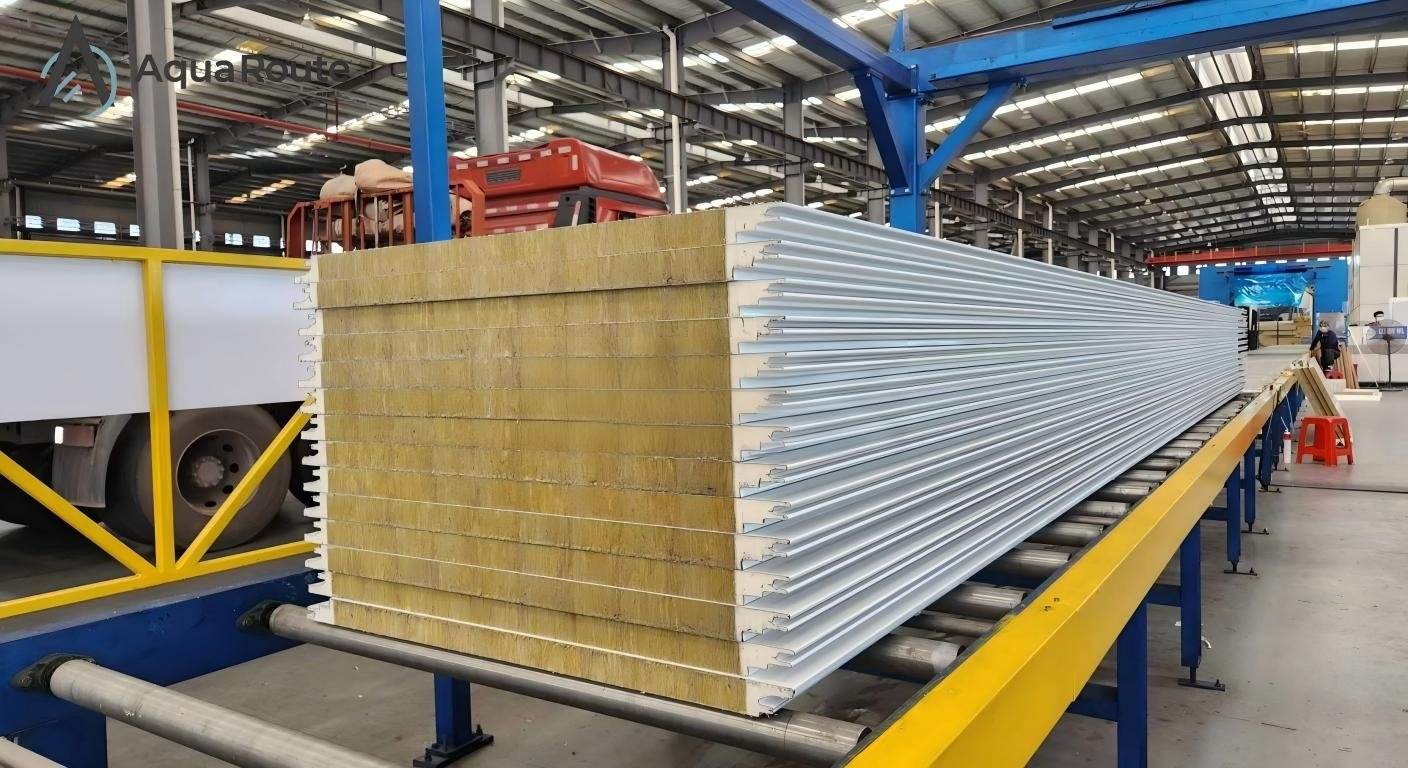
EPS vs PIR vs Rockwool in High Humidity: A Technical Comparison for Southeast Asia
Why This Comparison Matters in Southeast Asia
Southeast Asia’s 80-90% humidity creates a ‘material divide’ – the wrong choice isn’t just about performance difference, it’s about structural failure. For industrial facilities across the region—from Thailand’s EEC corridor to Indonesia’s Karawang belt and the Philippines’ Clark Freeport—material selection becomes a 10-year TCO decision. This article connects to our integrated climate construction system framework and references tropical climate requirements across Southeast Asia’s major industrial zones.
Head-to-Head: The Core Comparison Table
| Parameter | EPS Panel | PIR Panel (机制板) | Rockwool (Standard) | Rockwool (PU Edge-Seal) |
|---|---|---|---|---|
| Interface Type | Standard overlap | Tongue and groove joint ⭐ | Standard overlap | PU continuous edge seal ⭐ |
| Core Density | 16-22 kg/m³ | 40-45 kg/m³ | 100-140 kg/m³ | 100-140 kg/m³ |
| Thermal Conductivity | 0.038-0.041 W/(m·K) | 0.022-0.024 W/(m·K) | 0.038-0.045 W/(m·K) | 0.038-0.045 W/(m·K) |
| Fire Rating (GB 8624) | B2 | B1 | A1 | A1 |
| Water Absorption (24h) | 2-5% | 1-3% | 1-2% | <0.5% |
| Humidity Resistance | Poor | Good | Good | Excellent |
| Service Life (Tropical) | 5-8 years | 8-12 years | 10-15 years | 15-20 years |
| Replacement Frequency | 2-3x/decade | 1-2x/decade | 1x/decade | Minimal |
| Approx. Cost/m² | $ | $$ | $$ | $$$ |
| Best For | Dry climates | Cold storage | Fire-critical | Humid coastal |
Data sources: GB/T 23932-2009, GB 8624-2012; field monitoring data from tropical coastal installations (Southeast Asia-equivalent climate zone, 2022-2025); BMKG Indonesian climate database; PAGASA Philippines weather records.
Deep Dive: The Humidity Problem
EPS – The Sponge Effect
EPS foam absorbs moisture through capillary action, expanding and compromising insulation value by up to 30% after 3 years in 80%+ humidity.
PIR – Cold Storage Champion with Tongue and Groove Joint
PIR’s closed-cell structure delivers the best thermal conductivity (0.022 W/m·K) among sandwich panel cores, making it the industry standard for cold storage and deep-freeze facilities.
Key Advantages:
- Superior thermal efficiency: 0.022 W/m·K — 40% less energy loss than EPS/Rockwool
- Tongue and groove joint system: Factory-precision tongue and groove connections ensure rapid installation and airtight seals critical for temperature-controlled environments
- B1 fire rating: Meets industrial safety codes without the weight of mineral wool
- Industry Standard for ASEAN cold chain: PIR is the universally recognized material for Thailand’s food processing zones and Indonesia’s pharmaceutical logistics hubs
Tropical Considerations:
In open humid environments (>80% RH sustained), PIR benefits from proper edge sealing and vapor barrier design — standard practice for professional cold room installations. For climate-controlled interiors, PIR maintains peak performance across the full service life.
Recommended Applications:
- Cold storage warehouses
- Blast freezers and processing rooms
- Pharmaceutical clean rooms with active HVAC
- Controlled-atmosphere facilities with dehumidification systems
Rockwool – The Fiber Stability
Rockwool mineral fibers resist moisture penetration but exposed edges in humid coastal zones still absorb atmospheric moisture.
Why PU Edge-Sealing Changes Everything
PU edge-sealing creates a continuous moisture barrier that prevents capillary water ingress at panel joints – the weakest point in humid environments. Learn more about PU edge-sealing technology.
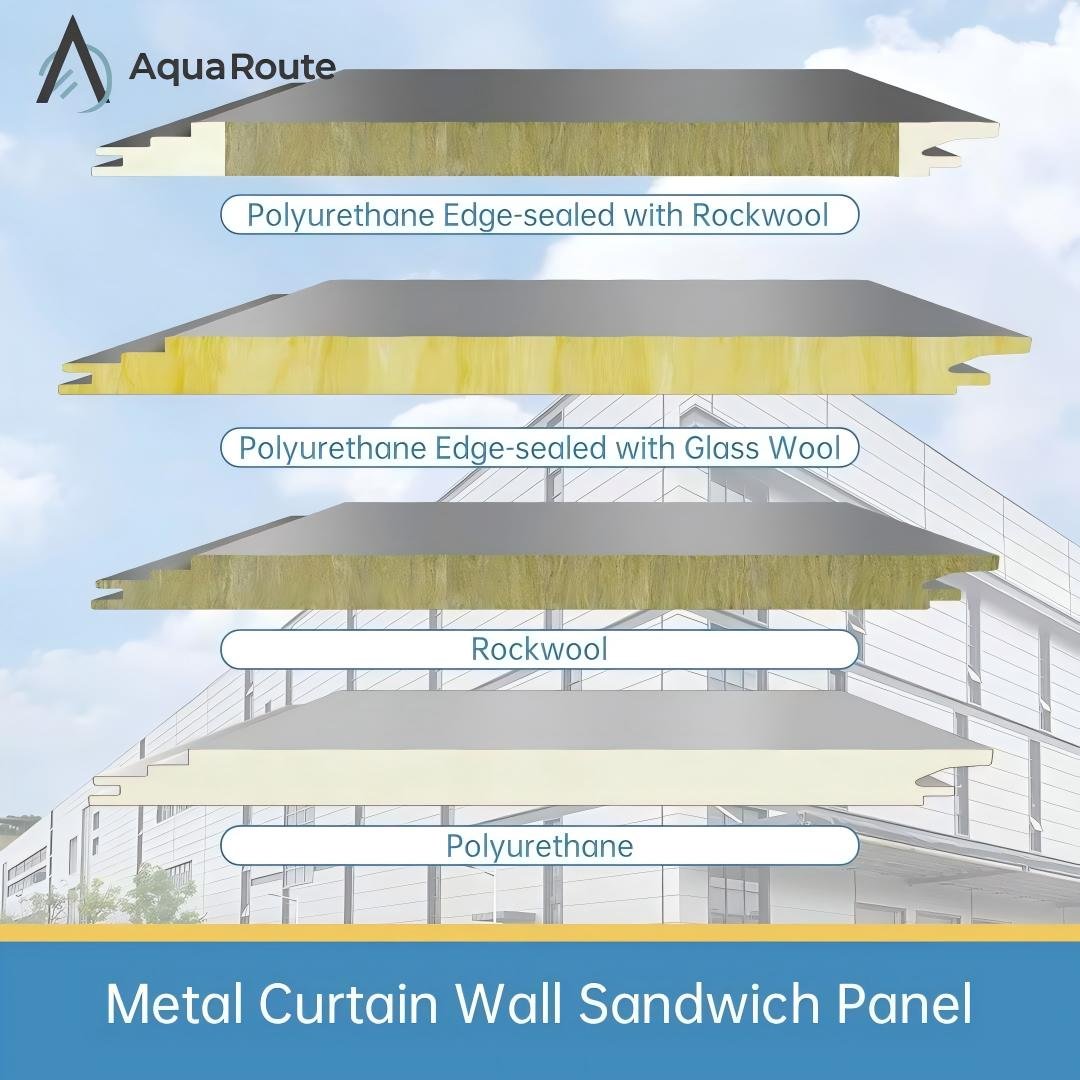
Factory-precision PU edge-sealing creates a complete barrier against atmospheric moisture ingress at panel joints.
Tropical Climate Stress Test: 18 Months to 5 Years
- Month 6: EPS edge expansion begins
- Month 18: PIR maintains thermal performance in controlled environments; open-humidity installations benefit from periodic edge inspection
- Year 3: Standard rockwool has slight moisture at seams
- Year 5: PU edge-sealed rockwool shows zero degradation. PIR cold storage installations maintain consistent thermal performance with proper vapor barriers.
Data from Hainan Island food processing facility, China. Climate equivalent to Karawang, Indonesia.
The Hidden Cost Calculator
| Cost Item | EPS (10yr) | PIR (10yr) | Rockwool+PU (10yr) |
|---|---|---|---|
| Initial Purchase | 100 | 150 | 200 |
| Installation | 30 | 30 | 35 |
| Maintenance (x cycles) | 80 (3x) | 45 (2x) | 15 (minimal) |
| Replacement (x cycles) | 120 (2x) | 75 (1x) | 0 |
| Downtime Cost | 60 | 30 | 5 |
| TOTAL 10-YEAR TCO | 390 | 330 | 255 |
When NOT to Choose Rockwool
- Budget extremely limited small warehouses
- Completely dry temperate climates (like Northern China)
- Temporary structures (<5-year use period)
- Non-critical storage where fire safety meets minimum code only
When to Choose PIR
PIR excels in specific applications where maximum thermal efficiency is critical:
- Cold storage facilities requiring high-efficiency thermal insulation
- Controlled atmosphere warehouses with active dehumidification
- Interior partition walls in climate-controlled environments
- Projects where B1 fire rating meets code requirements and humidity is actively managed
PIR’s 0.022 W/(m·K) thermal conductivity remains unmatched for pure insulation performance.
When to Choose EPS
EPS remains viable for:
- Temporary structures and short-term installations (<5 years)
- Interior applications in fully climate-controlled environments
- Projects with extremely limited capital budgets where replacement cycles are acceptable
FAQ
Q: Which sandwich panel performs best in 90% humidity?
A: Rockwool with PU edge-sealing demonstrates <0.5% water absorption after 24h testing, outperforming EPS (2-5%) and PIR (1-3%).
Q: Is PIR worth the extra cost vs EPS in tropical climates?
A: PIR offers superior thermal conductivity (0.022 vs 0.038 W/m·K), making it ideal for cold storage and energy-critical applications. EPS works for budget-sensitive projects in controlled environments. For humid coastal industrial zones, rockwool with PU sealing provides the most balanced long-term value across fire safety, humidity resistance, and service life.
Q: Why does rockwool need PU sealing in humid environments?
A: Rockwool fiber resists moisture, but exposed panel edges create capillary entry points that PU sealing protects against humidity ingress.
Q: Can I use EPS for cold storage in Indonesia or Thailand?
A: EPS works for cold storage in dry conditions (<60% RH) but moisture absorption degrades performance rapidly in tropical settings. Consider PIR for cold storage in Southeast Asia.
Q: What’s the lifespan difference in coastal industrial zones?
A: Based on China’s coastal data: EPS 5-8 years, PIR 8-12 years, Rockwool 10-15 years, Rockwool+PU 15-20 years.
Next Steps
Option A: Explore PU Edge-Seal Implementation
Option B: View Integrated System Framework
Download 10-Year TCO Calculator (English/Chinese Bilingual)
Excel template with IDR/THB/PHP currency data for Southeast Asia