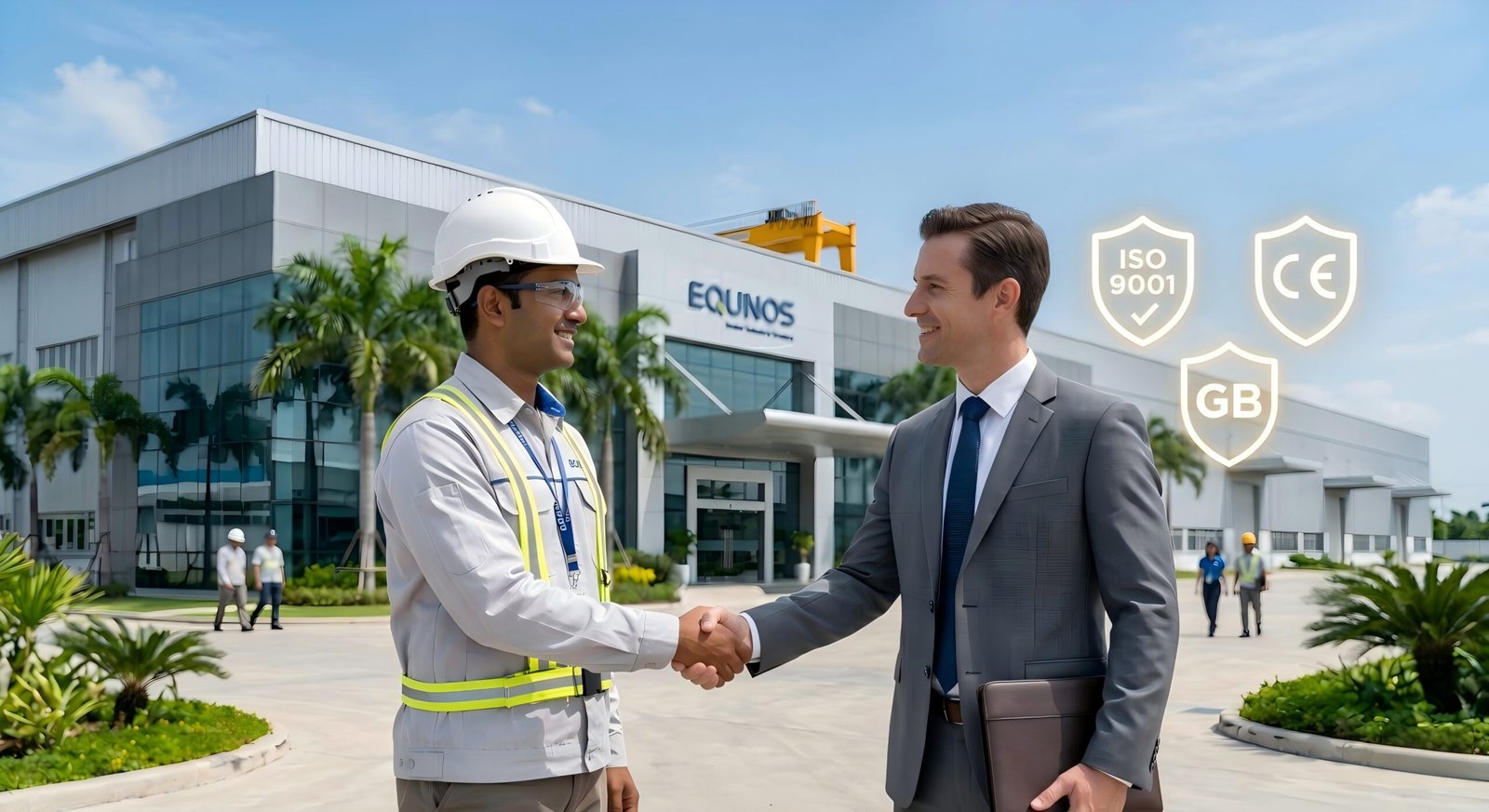
The Hidden Costs of Non-Compliance: A Buyer’s Guide to International Standards in Industrial Construction
When Budget Cuts Cost You Everything
Southeast Asia’s industrial sector is booming. Manufacturing hubs in Indonesia, Thailand, and the Philippines are expanding at breakneck speed. New factories are rising. New cold storage facilities are going online. New cleanrooms are being commissioned.
But here’s the problem nobody talks about: In the rush to meet aggressive budgets, many facility managers are choosing materials based on the lowest initial quote—not on compliance.
They’ll source a batch of sandwich panels from an unverified supplier. They’ll spec out insulation that looks good on paper. They’ll cut corners on certifications because “it’s just the interior lining.”
Then the inspection happens. Or the audit. Or the insurance claim gets denied.
And suddenly, that “savings” of $20,000 on material costs becomes a $500,000 problem.
This article is for procurement managers and engineering directors who understand that international standards aren’t red tape—they’re risk management. Let’s decode what compliance actually means, why it matters, and what it’ll cost you if you ignore it.
Demystifying the Core Standards That Actually Matter
When we talk about “international standards,” most buyers get overwhelmed. ISO this. CE that. GB something-or-other. It all sounds like alphabet soup.
Let’s translate that soup into business language.
ISO 9001: The Quality Promise
What it really means: A third-party auditor has verified that the factory operates under strict quality controls. Every sandwich panel leaving the line is tested. Every batch is tracked. If something goes wrong on day 1, it will go wrong the same way on day 1,000—but more importantly, the factory catches it before it ships.
Why your buyer’s team cares: You’re not just buying 1,000 panels. You’re buying consistency across 10,000 units over two years. ISO 9001 means panel #1 and panel #10,000 will have the same thermal properties, the same fire rating, and the same structural integrity. No surprises mid-project.
Red flag: A supplier claims to have ISO 9001 but can’t provide recent audit certificates or says “the document is in our main office.” Real ISO 9001 shops have certification numbers, auditor names, and expiration dates ready to share.
CE Mark: Your International Safety Passport
What it really means: A manufacturer has verified (either independently or through a notified body) that their product meets EU safety, health, and environmental requirements. This includes fire safety (EN 13823), thermal performance (EN 12667), and structural integrity.
Why your buyer’s team cares: CE-marked panels can be sold anywhere—EU, UK, North America, or high-end projects in Southeast Asia. More importantly, international insurance companies and multinational corporate clients require CE certification for coverage. If you’re building a facility for a Nestlé plant or a Unilever warehouse, they will ask for CE.
The real kicker: CE certification proves the material was tested by independent labs, not just the manufacturer’s internal testing. That’s credibility.
Red flag: A supplier says “our panels meet CE standards” but doesn’t have the actual CE certificate or technical file. CE is a legal declaration, not a suggestion.
GB Standards (China): Why You Should Care Even If You’re in Thailand
This one surprises people.
GB 8624 is China’s A1/B1 fire classification standard. It’s stricter than many European or Southeast Asian fire codes. Chinese manufacturers who meet GB standards have gone through the most rigorous testing regime in the world.
Why this matters to you: If your insulation (rockwool, PIR, PUR) meets Chinese GB A1/B1, it will absolutely meet Indonesian, Thai, or Philippine fire safety audits. You’re over-specified in the best way possible. You’ve got a safety buffer.
Aqua Route’s core sandwich panel systems have been rigorously tested and installed across hundreds of large-scale manufacturing facilities in China—operating under some of the most stringent building inspections globally. We take this proven core technology and optimize it specifically for the extreme humidity and logistics requirements of the Southeast Asian market.
Red flag: A supplier says their panels “probably meet GB standards” or “are equivalent to GB.” If they’re actually GB-certified, they’ll show you the testing certificate. If they’re guessing, they’re gambling with your project.
The Hidden Costs of Non-Compliance: When Things Go Wrong
Now let’s talk about what actually happens when compliance takes a backseat.
Cost #1: Failed Fire Safety Audits (The Shutdown)
The scenario: Your facility is 80% complete. The building inspector shows up for the fire safety review. They pull a panel sample, send it to the lab, and—it fails. The material is classified as B2 or C instead of A1/B1.
Legally, you cannot occupy the building until materials are upgraded.
The financial damage:
- Emergency rework budget: $60,000–$120,000 (depending on facility size)
- Temporary materials rental while rectification happens: $10,000–$20,000/month
- Project delay (2–6 months): Lost rental income, inventory storage costs, logistics delays
- Total hidden cost: $200,000–$500,000 minimum
Compare that to the $15,000–$25,000 you “saved” by sourcing cheaper, non-certified panels upfront. The math doesn’t work.
Regulatory pressure is increasing: Thailand’s Department of Fire Prevention and Rescue is tightening inspections on industrial facilities. Indonesia’s fire codes are converging with ASEAN standards. You cannot outrun this.
Cost #2: Skyrocketing Insurance Premiums (Or Outright Rejection)
The scenario: Your facility is complete and operational. Your insurance broker asks for documentation of building materials as part of the underwriting process. You provide specs. The insurer checks—your insulation is not certified, or worse, it’s known to be flammable when exposed to certain conditions.
The insurer either:
- Denies coverage entirely, or
- Adds a 40–80% surcharge to your premium
The financial damage:
- Standard industrial facility insurance: $40,000–$80,000/year
- Non-compliant material surcharge: +$15,000–$60,000/year (or rejection)
- Over 10 years: $150,000–$600,000 in excess premiums—or zero coverage
And if there’s a fire? An uninsured loss that should have been covered can bankrupt the business.
Multinational clients enforce this: If your tenant is a foreign company (food processing, pharmaceuticals, electronics), their corporate insurance policy requires third-party-certified materials. They won’t even sign a lease if materials don’t meet standards.
Cost #3: Downtime & Forced Retrofitting (The Rip-and-Replace)
The scenario: Your facility has been operational for 18 months. A regulatory inspection flags your panels as non-compliant (perhaps a newer, stricter standard came into effect). You’re ordered to upgrade.
Now you’re not just replacing panels. You’re:
- Stopping production temporarily
- Removing existing (non-compliant) materials
- Installing new (compliant) materials
- Re-testing and re-inspecting
The financial damage:
- Material replacement: $80,000–$150,000
- Labor for removal and reinstallation: $20,000–$40,000
- Production shutdown (lost output, worker idle time): $30,000–$100,000+ per month
- Reinspection and permitting fees: $5,000–$15,000
- Total: $300,000–$800,000+ for a retrofit that compliance upfront would have prevented
Case example (anonymized): A food processing plant in Thailand sourced discounted insulation panels. Two years in, a surprise audit found the material was below-spec. The rip-and-replace cost them 6 months of downtime and $450,000 in direct costs—plus loss of market share to competitors.
The Buyer’s Compliance Checklist: What to Demand Before You Buy
Alright, you’re convinced. Now—what do you actually ask for?
Here’s a practical checklist your procurement team should use before signing any purchase order:
Audit Step 1: Third-Party Testing Reports (Non-Negotiable)
What to ask for:
- “Provide independent third-party testing reports (such as GB, EN, or ISO standard reports) demonstrating fire performance (e.g., A1/B1 classification).”
- “Provide technical data sheets showing certified thermal resistance values.”
- “Provide the structural load test report.”
Why: Manufacturer’s internal testing means nothing. You need labs that the manufacturer cannot control—like SGS, TÜV, or equivalent bodies in your region.
Audit Step 2: ISO 9001 System Verification (Trust, But Verify)
What to ask for:
- “Provide your current ISO 9001 certificate, including the certificate number, auditor name, and expiration date.”
- “Provide your latest annual surveillance audit report.”
Audit Step 3: Material Traceability (Know Where It Came From)
What to ask for:
- “Does your factory maintain an internal batch traceability system for core materials (foam, rockwool, steel)?”
- “Can you provide standard Material Safety Data Sheets (MSDS) for the finished products?”
Audit Step 4: CE or GB Certification (If Applicable)
What to ask for:
- “If applicable to our project requirements, provide the CE Declaration of Conformity.”
- “If GB-certified, provide the GB testing certificate and classification.”
Audit Step 5: Reference Checks (Talk to Previous Buyers)
What to ask for:
- “Provide contact information for three recent projects where your panels were installed in a tropical industrial environment (within the last 2 years).”
The Path Forward
Here’s the truth: Compliance isn’t a cost. It’s insurance.
Yes, certified materials cost 15–25% more upfront than uncertified alternatives. But when you factor in:
- Avoided audit failures (cost: $200K–$500K)
- Avoided insurance surcharges (cost: $150K–$600K over 10 years)
- Avoided retrofitting (cost: $300K–$800K)
- Operational certainty (priceless)
That 15–25% premium becomes the smartest investment you’ll make on the project.
For deeper guidance, explore our framework on how to design building systems for tropical climates and compare core materials for high-humidity environments.
Call to Action
Ready to audit your facility’s compliance status?
Contact Aqua Route’s engineering team for a free compliance review. We’ll analyze your current materials, identify any gaps, and provide a retrofit roadmap if needed.
No obligation. Full transparency. Peace of mind.